Monday, 7 December 2009

Dec. 7th: Look around for someone lying in the sunshine


Pentangle- Basket Of Light (Transatlantic, 1969)

Basket Of Light was Pentangle's most commercially successful album, largely due to the use of 'Light Flight' as the theme tune of 70s BBC drama  Take Three Girls. 'Light Flight' opens the album and has one of the best intros to a folk song I've ever heard. Time signatures all over the place, jazz inflections: amazing. The rest of the album is just as good- sitar solos! Train imitations! Bowed bass! . There are so many 'high points' of Pentangle, Jacqui McShee's voice, Bert and John's playing, the rhythm section- that the description becomes a bit meaningless, because it's all good. A definite classic folk album.

Sunday, 6 December 2009

Dec. 6th; This state of emergency; how beautiful to be


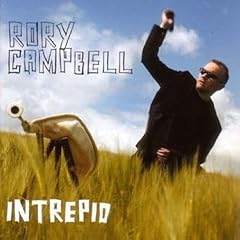
Rory Campbell-Intrepid (Vertical,2007)

Rory Campbell is a Scottish piper, singer and songwriter. He's played in a fair number of current Scottish folk bands: Old Blind Dogs, Deaf Shepherd (see what they did there?), The Big Spree, etc. Intrepid is a mix of traditional Gaelic songs given the modern fusion treatment, traditional and modern pipe and whistle tunes, self-penned songs and something else we'll get to in a minute.
Of the songs, there is a nicely-done version of 'Oran Nan Mogaisean' (Song Of The Mocassins), where a man sings the praises of his (badly made) shoes, and two English songs, of which 'Dreams' would fit nicely into any Radio 2 or adult contemporary playlist.  The tunes, including some written for his son and wife, flow over an effective acoustic-guitar-and- percussion backing; I'm not a piper so I can't comment on the technically proficiency, but it sounds great to me.
And then I read the tracklist. Track 5: Joga. It can't be the Bjork song, can it? Well, actually, it can. A Scottish folk musician singing a song by an Icelandic female pop star. It shouldn't work, but it does, and quite successfully too, turning it into a laidback acoustic ballad which Campbell's voice suits well.
It's the most surprising thing about Intrepid. A seeming disparate mix of pipe tunes old and new, English original songs, traditional Gaelic (and Bjork) shouldn't go together, but this collection does

Saturday, 5 December 2009

Dec. 5th: F.N., souffrance, qu'on est bien en France


Noir Désir- 666.667 Club (Barclay, 1996)

French rock is awful, right? The French have a reputation for their recent pop music being almost uniformly dire-and by recent i mean anything from about 1971 to the present. Most of the time, this reputation isn't entirely deserved. The language barrier is definitely to blame- a lot of French music focuses on the quality of the lyrics far more than the English equivalent would, but if you don't understand them, it doesn't matter how brilliant they are. Noir Désir (Black Desire) are probably France's premier rock band, have been active for decades and now have a rock'n' roll scandal to go with that: their frontman Bernard Cantat has just been released from prison, after serving time for murdering his girlfriend as the result of an argument.

666.667 Club went double platinum in France, and was very well received. In addition to the basic grunge template, there are gypsy violins and free jazz saxophone, amongst other things. In my opinion the band are at their best in their more politically or culturally aware songs, such as 'Un Jour En France', ridiculing the adulation of a golden-age postwar France ('les trentes années glorieuses' of modern French history) which never really was, and the slow rise of fascism (particularly that of the National Front, or F.N.) which was beginning at the time of this album. Perhaps tellingly, much of the criticism in a song which is almost 14 years old still applies to France today.
The slightly redundant English-language track which seemed to be obligatory at the time is indeed present; 'Prayer For A Wanker' (or 'woncur' as it ends up) but overall this is a very good album, musically tight and lyrically dextrous, and it even has one properly good English track, 'Lazy'. 'Un Homme Pressé' and 'Un Jour...' are the best songs by far but there is plenty here worth investigating.

Friday, 4 December 2009

Dec. 4th: And all for no reason, just one piece of lead


Johnny Cash- American IV: The Man Comes Around (American, 2002)

The fourth of Cash's collaborations with Rick Rubin, The Man Comes Around is a mix of carefully chosen covers,  a couple of originals and some re-recordings of  older Cash songs (1957's 'Streets Of Laredo', 'Sam Hall'). The title track is a new song which came from a dream Johnny had involving the Book Of Revelations, the four horses of the Apocalypse and Queen Elizabeth II, as you do. Of the covers, some of the most potentially disastrous work best: here 'Danny Boy 'is almost enough to make you forget the myriad heinous Daniel O' Donnell (and sub-Daniel O' Donnell...) versions; just Cash and a pipe organ, and nothing else. 'Bridge Over Troubled Water,' featuring Fiona Apple doesn't quite match the original but almost, nearly makes it.
'I Hung My Head', from Sting's original, shows Cash's talent as a storyteller; the tension is racheted up to an emotional climax, where you almost feel as much for the criminal as for the victim.
The CD's crowning achievement, however, is the cover of Nine Inch Nails' 'Hurt'. Given Cash's history of addiction, it's one song he's entitled to sing, and he injects an affecting pathos into a song already full of pain and self-disgust. It's enough to put anyone off drugs for life.

Thursday, 3 December 2009

Dec. 3rd: If I wish upon a star, take you just the way you are


The Pastels-Up For A Bit With... (Fire Records, 1991/2002)


The Pastels are Scottish indie legends, a cult band who've operated under the radar for various labels and with various lineups since 1982. This record, originally released in 1986, has one of the earlier incarnations.
It's been in my collection for a few years, since I came up to Glasgow Uni as a Fresher and someone said 'you like Belle & Sebastian? You have to buy these records', of which Up For A Bit...was one. I listened the first track with my fresher's ears and thought 'dear God, the production's all sludgy' and put it away. I was wrong. I finally got to see the Pastels live on Friday night and they were great. Up For A Bit... includes Pastels classics like 'Crawl Babies', 'Get 'Round Town' and the brilliant 'Baby Honey'. The band are typical of c86, 'shamblepop' indie, accompanying Stephen Pastel (né McRobbie)'s laid-back vocals. The production is of its time but there are some great songs, and the album is a good introduction to the Pastels' fairly large and wideranging (it now includes film soundtracks, remix album and other projects) work.

Wednesday, 2 December 2009

Dec. 2nd: Salut Les Copains!


Various Artists: Sixties Girls Vol. 1 (Magic Records, 1998

This is a cheap French repackaging of four 1960s yéyé EPs by various French girl singers, of whom the best known by some margin is Françoise Hardy. Yéyé is a musical style originating from 1960s France in response to nascent American youth culture and rock and roll. There are numerous conventions which usually pop up; for example choral backing vocals, brushed drums,  French language adaptations of English hits, and fairly interchangeable singers with few writing credits to their name (the exception is Hardy, who has far transcended her yéyé beginnings).
The songs here, 16 plus a bonus track of the theme tune and jingles to 'Salut Les Copains' , one of the first French youth programmes- are all pretty much archetypal examples of high-quality yéyé, particularly Christine Lebail's 'Les Livres d'École' and 'L'an prochain sur la plage' and Christine Delaroche's 'La Porte à Coté'. All very good for dancing to and singing along-whether you know French or not.
The only slight disappointment, ironically, is Françoise Hardy's contributions; all English versions of her French hits when her English pronounciation was 'interesting'-far inferior to the originals. These serve as a terrible introduction to her work in general, most useful for trying to decode what's she's singing (e.g. 'I'm asking zee stars up a bow'). The widely available Vogue Years compilation contains all her songs here in their original forms and far more of some of the best music of its type, and of France in general.

Tuesday, 1 December 2009

Dec.1st: I dig the Stones, you dig 'Sheer Heart Attack'


Isobel Campbell & Mark Lanegan- Sunday at Devil Dirt (US Edition) (Fontana 2008)

I'm a big Belle & Sebastian fan; however I'm a post-Isobel Campbell B&S fan. I first came across the band on 2003's Dear Catastrope Waitress, after Campbell had left, and I personally don't think the band are any poorer without her. I've always found her voice too light for my tastes-and I found the one solo album I own, The Green Fields of Foreverland, slightly too sugary and twee.
However, the combo of Campbell with ex-Screaming Tree Mark Lanegan offered something unexpected and original, and their first collaboration, Ballad Of The Broken Seas (2006) was a pleasant surprise. Sparse, dusty Americana, two disparate voices which somehow complemented each other.
....Devil Dirt is essentially, more of the same, with an expanded sound (organs; a gospel choir and jazz-bar piano outro on 'Back Burner'). Anyone hoping to hear lots of Isobel will be disappointed; the majority of leads are sung by Lanegan, Campbell mostly having a background role of arranger,backing vocalist and songwriter (all songs but one are her originals). On the Fontana edition, several bonus tracks are added, many of which were added to a subsequent EP in the UK, and these bonus tracks are some of the strongest songs on the record, particularly the comparitively danceable 'Hang On'.
Overall, ...Devil Dirt seems a weaker album than Ballads of The Broken Sea, possibly because the partnership's element of surprise  has worn off. In parts it seems more like a Mark Lanegan solo effort than a collaboration.